
Updated Guidelines For Reasonable Systems

Global Textile Printing Industry 2018: 2016-2024 Strategic Business Analysis & Forecasts - Furniture Market Offers Strong Growth Potential for Digital Printing The "Textile Printing - Global Strategic Business Report" report has been added to ResearchAndMarkets.com's offering. The report provides separate comprehensive analytics for the US, Canada, Japan, Europe, Asia-Pacific, Latin America, and Rest of World. Annual estimates and forecasts are provided for the period 2016 through 2024. Also, a five-year historic analysis is provided for these markets. This report analyzes the worldwide markets in Million Square Meters by the following Technology Type: The Global market is also analyzed by the following Fabric Type: Textile Printing: Creating Attractive Designs and Patterns on Fabrics Screen Printing: What Does the Future Hold? Digital Textile Printing: New Growth Avenues Second Wave of Digital Textile Printing Technology Adoption to Drive Growth Europe & Asia-Pacific: Spearheading Growth in Digital Textile Printing Market Can Digital Printing Reverse the Outsourcing Trend? The Need to Extend Beyond Sampling/ Niche Applications What Hampers Commercialization of Digital Textile Printing? Digital Textile Printing Offers Significant Opportunities for Economic Development M&A Activity Paves Way for Strong Growth in Digital Textile Printing Market Digital Textile Printing Vs Conventional Screen Printing Comparison of Different Parameters for Conventional and Digital Printing Technological Advancements in Textile Printers and Inks Lift Status of Textile Printing Market Improvements in Printhead Technology Making the Printing More Effective Inkjet Textile Printing Market: Potential for Growth Soft Signage: High-Growth Segment in Digital Textile Printing Market Flag Printing: Favorable Growth Opportunities Furniture Market Offers Strong Growth Potential for Digital Printing Fashion Industry Stimulates Adoption of Wide Format Textile Printers Digital Printing, Artificial Intelligence and Personalized Clothing Digital Textile Printing in Home Textiles Market Dye Sublimation Printing: Ideal for Soft Signage & Home Dcor Textile Printing and Ad Campaigns Fuel Demand for Large Format Printers Polyester: The Fabric of Choice for Digital Printing Popularity of Fabrics Used in Various Markets Assessing the Pros & Cons of DTF Printing & DTG Printing Ink Chemistries Holds Key in Textile Printing Growth Chemistry Requirements Encourage Development of Specialized Processing Equipment Nanotechnology to Transform Textile Printing Industry An Emerging Application with Huge Potential Green Printing Practices in Textile Printing Evolution of Global Standards for Organic Fibers Acrylic Fibers Production in Asia-Pacific Gathers Pace SPGPrints Showcases Digital Inkjet and Rotary Screen Technologies for Textile Printing MTEX Introduces Digital Direct-to-Textile Printers Digital Graphics Rolls Out New Textile Printers Fisher Textiles Introduces New Fabric Media Styles Agfa Graphics Launches Avinci DX3200 Dye Sublimation Printer ColorJet India Introduces TXF Digital Textile Printer Electronics For Imaging Introduces VUTEk LED and Soft Signage Printers Kornit Digital Introduces Avalanche R-SeriesDirect-to-Garment Printing System Konica Minolta Adds Two New Colors Inks for NASSENGER Textile Printers Mimaki Launches Tx300P-1800B Belt-type Direct-to-Textile Inkjet Printer Mimaki Tx500P-3200DS Direct Sublimation Inkjet Printer Bordeaux Digital Printink Introduces EDEN PG for Textile Printing HP Introduces Upgraded HP Latex 300 Printer Series Mimaki Releases Artista Textile Color Collection Huntsman Introduces LANASOL Black NSC Dye Mimaki Unveils MM700-1800B Wide-format Direct Textile Printer SPGPrints Introduces JAVELIN Digital Inkjet Textile Printer Huntsman Introduces ERIONYL Flavine FF and Rhodamine FF Dyes Mimaki Launches TS30-1300 Textile Printer Aleph Team Rolls Out LaFortePaper and LaForteTextile Printers Fisher Textiles GF 6732 Apollo Fabric for Dye Sub Transfer Printing Mimaki Launches TS500P-3200 Inkjet Printer Fisher Textiles Launches DD 6788 MoJo Backlit Fabric for Dye Sub Fisher Textiles Rolls Out ETP 2319 Athletic Mesh Apparel Fabric Konica Minolta Introduces NASSENGER 10 and NASSENGER 8 Inkjet Textile Printers Mimaki Launches TS300P-1800 Inkjet Printer SPGPrints Expands Production Capacity of Inkjet Inks Rieter Takes Over Schweiter's SSM Textile Machinery Division Huntsman and Viyellatex Enter into Collaboration Agreement DCC Establishes Textile Printing Operations in Bangladesh MIMAKI Acquires La Meccanica Costruzione Tessili SPGPrints Increases Production Capacity at Kufstein Facility Canon Enters into Partnership with Media One Electronics For Imaging Acquires Reggiani to Foray intoInkjet Textile Printing Market Mimaki Inks Distribution Agreement with Next Wave Media Solutions
For the original version including any supplementary images or video, visit https://www.prnewswire.com/news-releases/global-textile-printing-industry-2018-2016-2024-strategic-business-analysis--forecasts---furniture-market-offers-strong-growth-potential-for-digital-printing-300675972.html
 textile testing wikipedia ศูนย์ ทดสอบสิ่งทอ


 What is This? Five Things Businesses Must Do To Prepare For Mobile-First Indexing Sheila Kloefkorn is CEO and president of KEO Marketing , a full-service B2B marketing agency. Internet usage on mobile devices has been gaining on desktop computers for years. In 2018, mobile usage is expected to top 51% of all internet access . It should come as no surprise that Google has been watching these trends and has begun rolling out its response to the shift from desktops to mobile devices, namely with the mobile-first indexing . Having a mobile version of a website that is responsive has been a factor in Google's algorithms for some time. But up until now, the desktop version was Google's primary concern when crawling and indexing a site. That has changed as Google now analyzes the mobile version of websites first, with desktop sites only being indexed first if a website does not have a mobile version. This new algorithm has already been applied to websites all over the world, with more added each day. To ensure that your SEO strategy and your website's rankings do not suffer when this new algorithm crawls the site, follow these steps to make sure that Google favors your site’s content. According to Google, if your mobile and desktop versions are identical, this new algorithm will not affect your website contents’ rankings.



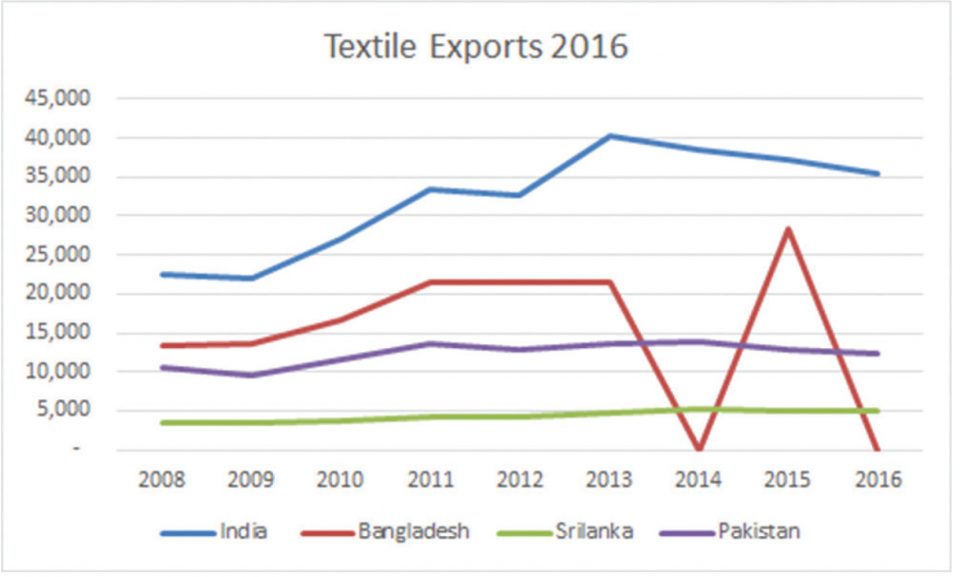 This has caused the sector to miss out on technological advantages to its competitors. The All Pakistan Textile Mills Association (APTMA) announced that its members have a plan to increase investment in Pakistan’s textile industry by establishing 1,000 garment manufacturing plants with a total of $7 billion in investments, the association said. The plan is to set up garment plants near major textile producing cities like Lahore, Sheikhupura, Faisalabad, Kasur, Multan, Sialkot, Rawalpindi, Karachi, and Peshawar, with the plants installing half a million stitching machines, which will boost annual production to 3 billion pieces. New investments dropped to more than half a billion rupees ($4.52 million) in 2016-17, compared to Rs 1 billion ($9 million) in 2005-06, the association said. Further, currently, about 35 percent of the textile industry’s production capacity was damaged, causing loss of approximately $4.14 billion worth of potential exports. Once the proposal is implemented, the industry will need an additional 10.3 million bales of raw cotton, 345 million kilograms of manmade fiber, 1.98 billion kilograms of additional yarn and an additional 7.93 billion square meters of processed fiber. This while cotton-producing area and cotton production have decreased 30 percent and 38 percent, respectively, in Punjab since 2011. While the textile sector performed poorly overall, readymade garments did show reasonable growth. According to the Pakistan Bureau of Statistics, the exports of readymade garments registered 13 percent year-on-year growth in July-May 2017-18, which stood at $2.346 billion in 2017-18.


 Log in or go back to the homepage . Facebook tries selfie commerce with augmented reality ads Michael Kors tried advertising sunglasses in augmented reality on Facebook. Credit: Facebook Facebook has introduced new augmented reality ads that let people try on virtual renditions of products, as the battle for control of consumers' cameras heats up. People flicking through the News Feed will see ads for Michael Kors sunglasses, for instance, and can play with an augmented reality version through their cameras. They can also see how a piece of Pottery Barn furniture would look in their living rooms if they hold their cameras up to the spaces. Facebook has already tested the ads with Michale Kors, Pottery Barn, Bobbi Brown, Wayfair, Sephora and others. Augmented reality is a technology that was pioneered by apps like Snapchat, and now adopted by the biggest platforms like Facebook , Apple and Google , blending the real and virtual worlds through phones and other devices. "Better marketing equals better shopping," says Ty Ahmad-Taylor, VP of product marketing at Facebook, who was speaking at a holiday shopping event at Facebook's New York headquarters on Tuesday. "You connect with [customers] in a way that's unusual and new, and you can deliver messages to them in a format they want to accept." Facebook is not the first company to connect shopping and augmented reality.
 Search engine optimisation makes pretty sure which search engine listings, much like Yahoo plus the goggle, placed the huma web page greater between specify over outcomes, when national consumers feel and look for military stuff related through to both business. Go through upon to help you learn more.